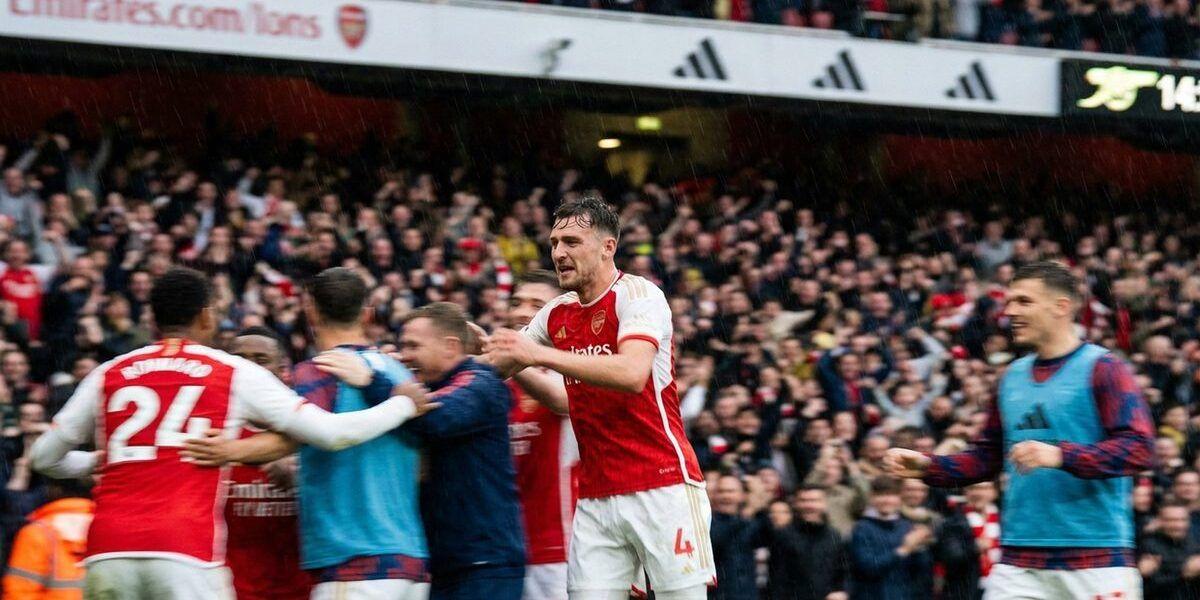
Seventy-two seconds. That is all it took. Seventy-two seconds for the ball to travel from the centre circle to the back of the Tottenham net, seventy-two seconds for White Hart Lane to fall into stunned silence, seventy-two seconds for every Arsenal supporter in the ground to lose their collective minds. If there is a purer distillation of the North London derby’s capacity for instant, visceral drama, I have yet to witness it.
The opening salvo
The whistle blew, the ball was played forward, and before Tottenham’s defenders had finished adjusting their shin pads, Tomas Rosicky had put us ahead. It was a goal of devastating simplicity — quick passing through the centre, a ball played into the channel, and there was the little Czech maestro, arriving at precisely the right moment to prod the ball past Hugo Lloris. The Lane erupted. Or rather, one small corner of it erupted. The rest fell silent, the kind of silence that follows a punch to the solar plexus.
Seventy-two seconds. You barely have time to find your seat, unwrap your programme, locate your mates in the crowd. And yet in those seventy-two seconds, the entire complexion of the match was altered. Tottenham, who had arrived with plans and patterns and pressing triggers, were suddenly chasing the game before it had properly begun. The psychological blow of conceding so early, in a derby of all matches, cannot be overstated.
Rosicky’s renaissance
A word on Rosicky, because he deserves more than a passing mention. Here is a player who has spent much of his Arsenal career battling injuries, a man who has given us agonising glimpses of quality between long spells in the treatment room. But when he plays — when he is fit and sharp and the occasion demands it — he is capable of performances that remind you why Wenger signed him in the first place.
This was one of those performances. Not merely the goal, but the entire display. The pressing, the energy, the refusal to cede an inch to opponents a decade younger. Rosicky played the derby as though his very existence depended on it, which, in the context of North London football, it rather does.
Controlling the narrative
Arsenal’s performance after the opening goal was a masterclass in game management. We did not sit back and invite pressure — that would have been suicidal against a Tottenham side with enough quality to punish passivity. Instead, we controlled the tempo, keeping possession in areas that caused Spurs problems while remaining alert to the counter-attacking opportunities that their increasing desperation inevitably created.
Ozil was magnificent in the number ten role, orchestrating attacks with the nonchalance of a man conducting a particularly straightforward symphony. Cazorla, alongside him, provided the ball-carrying ability that allowed us to escape the press and transition from defence to attack in those crucial moments when Spurs committed bodies forward.
The North London derby is not merely a football match. It is a statement of identity, a declaration of supremacy, a ninety-minute argument about who owns this part of the city. And on this afternoon, the argument was settled before it had barely begun.
The second half was managed with intelligence and composure. Further goals came — the margin of victory reflecting not just our superiority on the day but the chasm in quality between the two sides that, for all Spurs’ recent improvement, continues to exist. Each goal was celebrated with the particular intensity reserved for North London derbies, that primal joy that comes from defeating the people who live three miles up the road and support the wrong team.
What the derby means
I have written before about the great derbies of the past, and this one takes its rightful place in the canon. Not because it was a classic in the traditional sense — the early goal rather took the sting out of the contest — but because of what it represented. In a season where Arsenal’s title challenge was beginning to waver, where doubts were creeping in like damp through old brickwork, this was a statement of intent.
We are still here. We are still Arsenal. And Tottenham, for all their noise and investment and promises of a new dawn, are still Tottenham. Some things in football do not change, and the fundamental dynamic of the North London derby — Arsenal’s quiet confidence versus Spurs’ perpetual frustration — remains as it has been for the better part of two decades.
Seventy-two seconds. That is all it took. In a sport defined by fine margins and sliding doors, seventy-two seconds to establish dominance, to silence a hostile ground, to remind everyone — including, perhaps, ourselves — that when Arsenal turn up to a North London derby, the result is rarely in doubt.
We walked out of White Hart Lane and into the March evening, and the songs rang out along the High Road, and for one perfect afternoon, all was right with the world. Arsenal continuing their winning ways. Plus ca change.