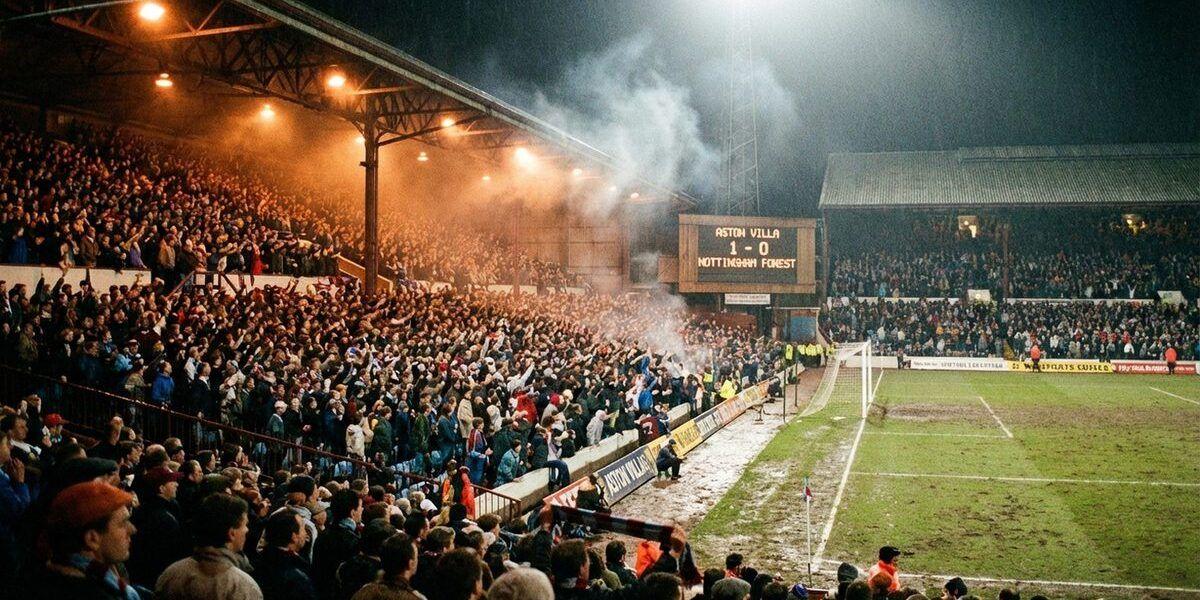
There is a particular quality to August football that September never quite manages to replicate. The pitches are firm and fast, the shirts are clean, and everybody — everybody — believes this could be the year. It was precisely that kind of afternoon on a warm day at Highbury in August 1990, when George Graham’s Arsenal welcomed Luton Town to N5 and proceeded to take them apart with the sort of controlled aggression that defined the early nineties.
The backdrop: champions with a point to prove
Arsenal had won the First Division title in the most dramatic circumstances imaginable just fifteen months earlier. Michael Thomas at Anfield. You know the story. But the defence of that title in 1989/90 had been a disappointment — a two-point deduction for a brawl at Old Trafford hadn’t helped, mind you — and George Graham was determined to put things right. The squad he assembled for the 1990/91 campaign was, in hindsight, one of the most formidable in the club’s history.
Tony Adams was already established as the captain, barely twenty-three but already leading that back four as though he’d been doing it for a decade. Lee Dixon, Nigel Winterburn, Steve Bould — the famous four were settling into a defensive partnership that would become the foundation of everything. In front of them, David Rocastle was at the peak of his powers, gliding past opponents with that effortless grace that made you catch your breath. Rocky. God, what a player.
The match itself
Luton arrived at Highbury with a game plan that was, to put it charitably, pragmatic. David Pleat’s side sat deep and invited Arsenal onto them, content to absorb pressure and try to nick something on the counter. It was, in fairness, a perfectly reasonable approach against a side that had just won the league. It also didn’t work.
Arsenal controlled possession with the patience that Graham demanded. The ball moved from side to side, probing, probing, always probing. Paul Merson was in one of those moods where everything he touched turned to gold — dropping deep to collect the ball, spinning, driving forward, finding spaces that shouldn’t have existed. Merse at his brilliant best was something to behold: unpredictable, instinctive, a footballer who played the game as though it were a form of jazz improvisation.
Alan Smith led the line with his usual intelligence. Smudger never got the credit he deserved, in my view. He wasn’t the fastest, wasn’t the strongest, but his movement was exceptional and his finishing was as reliable as a Swiss watch. He put Luton’s centre-halves through ninety minutes of torment, dragging them out of position, creating openings for Merson and Rocastle to exploit.
There was something about Highbury under floodlights, or even in bright August sunshine, that elevated ordinary football matches into something approaching theatre. The marble halls, the Clock End, the slight banking of the terraces — it all conspired to create an atmosphere that modern stadiums struggle to replicate.
Rocky’s afternoon
Rocastle was, by some distance, the best player on the pitch. His ability to receive the ball in tight areas, shift it onto his right foot, and accelerate past defenders was a joy to watch. He created the opening goal with a driving run from midfield that left two Luton players trailing in his wake before slipping a perfectly weighted pass into Smith’s path. The finish was clinical — low, hard, past the goalkeeper before he could set himself.
The second goal owed more to the collective. A passage of play involving at least eight passes, each one delivered with purpose and precision, ended with Merson curling a shot into the far corner from twenty yards. The Highbury crowd rose as one. This was Arsenal football at its finest — disciplined, organised, but with just enough flair to remind you that Graham’s side were more than merely functional.
A third arrived late on, and it was fitting that Rocastle scored it himself. A corner was only half-cleared, the ball fell to Rocky on the edge of the box, and he struck it sweetly into the bottom corner. He wheeled away with that big, beaming smile that everyone who watched him play remembers so fondly. It is, I think, one of the reasons his loss hit the Arsenal community so hard. He was one of us.
What the season became
Arsenal would go on to lose just one league match all season — a remarkable record that delivered the title with something to spare. The defensive record was extraordinary: 18 goals conceded in 38 matches. Adams and Bould were imperious, Dixon was tenacious, Winterburn was — well, Winterburn was Winterburn, which is to say he was utterly reliable and slightly terrifying in the tackle.
But it wasn’t just about defence. Smith finished the season as the league’s top scorer. Merson was brilliant. Rocastle, before injuries began to take their toll, was electric. And underpinning it all was George Graham’s obsessive attention to organisation and discipline. He wasn’t always loved for his methods — the early years under Graham had required patience — but by 1990/91, the doubters had been silenced.
Looking back at matches like the Luton win, it’s tempting to view them through rose-tinted spectacles. We all do it. But I’ve watched the footage back, and it holds up. This was a very good football team, well organised, well coached, and capable of moments of genuine quality. The 1990/91 title remains one of the great achievements in the club’s history, and afternoons like the Luton match were the building blocks upon which it was constructed.
If you’re interested in the broader arc of that era, I’d recommend having a look at our history section. George Graham’s Arsenal deserves to be remembered for more than just “one-nil to the Arsenal”. They were, at their best, a genuinely excellent side.