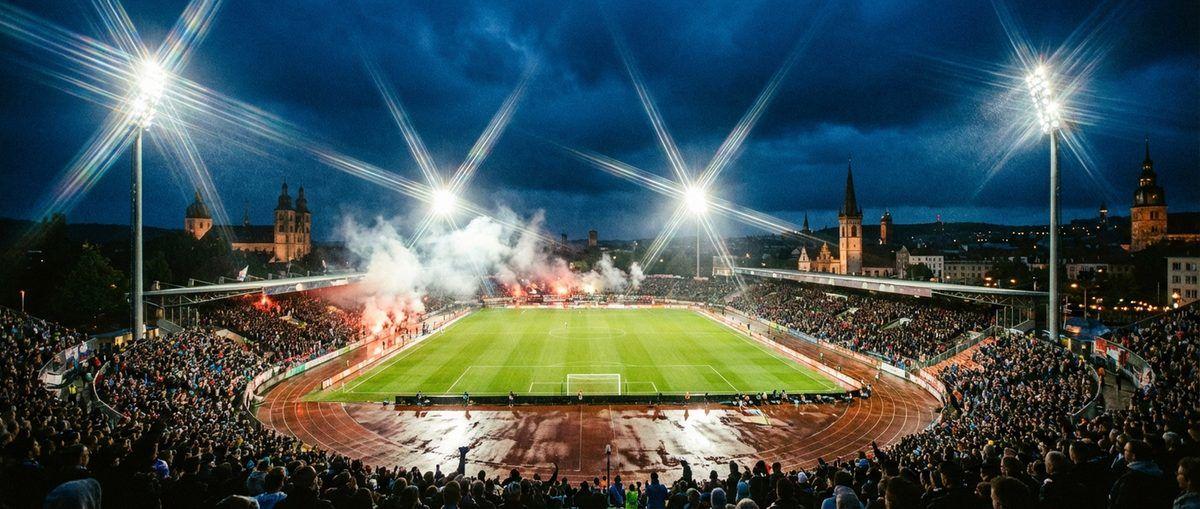
There is a sound that the Emirates makes on European nights that it simply does not make on Saturday afternoons. It is not louder, exactly — though it often is — but it carries a different frequency. A vibration. Something ancient and collective that rises from the concrete and the plastic seats and the overpriced lager and transforms a modern, sometimes sterile football stadium into something approaching a cauldron. We had forgotten what it sounded like. Six years is a long time to forget.
Arsenal’s absence from the Champions League — from the autumn of 2017 to the autumn of 2023 — was the single most visible symptom of the club’s decline. You can explain away league positions, rationalise cup exits, find silver linings in Europa League campaigns. But the Champions League is the measure by which serious European clubs are judged, and for six years, Arsenal were not in the conversation. We were outside the restaurant, noses pressed to the glass, watching the others eat.
The return
Matchday one. September the nineteenth. Arsenal versus PSV Eindhoven. The anthem played — that ludicrous, pompous, magnificent anthem — and something shifted in the stadium. You could feel it. A collective exhale. We are back. Then Saka scored, and Ødegaard scored, and before anyone had quite processed what was happening, it was 4-0 and the Emirates was making that sound again. The one we had forgotten.
The group stage has been, by any reasonable measure, a triumph. Beaten only once — a narrow 2-1 defeat at Lens, where Arsenal played poorly and still might have nicked something — and dominant in the other four matches. The 6-0 demolition of Lens at home was the kind of performance that makes you sit back and think: this team is actually very good. Not nearly good, not promising, not on-the-right-track good. Actually, genuinely, frighteningly good.
Leandro Trossard scored a hat-trick that night. Bukayo Saka ran the Lens defence ragged. The crowd sang with an intensity that reminded the older among us — and I include myself in that category, creaking bones and all — of different nights in a different stadium, when European football at Arsenal meant Highbury under lights and the kind of atmosphere that visiting teams found genuinely intimidating.
Highbury and the memory of 2006
I cannot write about Arsenal and the Champions League without writing about Highbury. Those European nights — the floodlights catching the Art Deco façade, the noise funnelled by the tight stands into something almost physical — were special in a way that is difficult to convey to anyone who wasn’t there. The Emirates, for all its modernity and comfort, has never quite replicated that intensity. On league Saturdays, it can feel like a library with better catering.
But on European nights, something changes. The Emirates remembers what it is supposed to be. The supporters remember what they are supposed to do. And the combination produces an atmosphere that, if not quite Highbury at its peak, is at least a credible impression.
The last great Champions League campaign was 2005/06 — that extraordinary run to the final in Paris, where Arsenal beat Real Madrid and Juventus and produced performances of such tactical sophistication that the continent sat up and took notice. The semi-final against Villarreal, with Lehmann saving that last-minute penalty, remains one of the most nerve-shredding experiences of my footballing life. The final against Barcelona, where we led through Sol Campbell’s header before Eto’o and Belletti broke our hearts in the last fifteen minutes, still hurts. Seventeen years later, it still hurts.
Since then, the Champions League has been a source of diminishing returns and accumulating embarrassment. The annual last-sixteen exits. The Monaco debacle in 2015. The 10-2 aggregate humiliation against Bayern Munich in 2017. And then nothing at all — just the hollow consolation of Thursday nights in the Europa League, playing in front of half-empty stadiums against teams whose names you had to Google.
Why this feels different
The temptation, with Arsenal doing well in a Champions League group stage, is to get carried away. I am old enough and scarred enough to resist that temptation. But I will say this: the manner of these performances suggests a team that belongs at this level. Not a team that is grateful to be here, not a team that treats the Champions League as a bonus or a novelty, but a team that expects to compete.
The 4-0 against PSV was controlled dominance. The 2-1 wins home and away against Sevilla were exercises in tactical maturity — Arsenal absorbing pressure, staying disciplined, and striking when the moments arrived. The 6-0 against Lens was a statement. Even the defeat in France — messy, frustrating, un-Arsenal in many ways — contained enough quality to suggest that the result was an aberration rather than a revelation.
There is a difference between participating in the Champions League and competing in it. Arsenal, after six years in the wilderness, appear to understand that difference intuitively. This is not tourism. This is a team that means business.
What strikes me most is the composure. Young teams in the Champions League are supposed to be overwhelmed by the occasion. They are supposed to freeze in the big moments, to make errors born of nervousness, to look like they have wandered into the wrong party. This Arsenal side has done none of that. Saka plays Champions League football as though he has been doing it for a decade. Saliba defends against European attacks with the same languid authority he brings to Premier League matches. Rice, in his first Champions League campaign, has looked entirely at home.
The noise, the drama, the belonging
I was at the Emirates for the PSV match, and I will be honest: I got slightly emotional when the anthem played. Not in a dramatic, tears-streaming way — I am British, we don’t do that — but in the quiet, throat-tightening way that comes from realising something you had lost has been returned to you. Like finding a book you thought you’d lent out years ago, discovering it on the shelf exactly where you left it.
The Champions League is where Arsenal belong. I understand the counter-argument — that the competition has become a closed shop for the super-rich, that it no longer represents the romance of European football, that the proposed reforms will only make it worse. All of that is true, and all of that is irrelevant when the lights come on and the anthem plays and your team walks out to face some of the best footballers on the planet.
I wrote once about fight and soul — about the intangible qualities that define a football club beyond results and trophies. The Champions League taps into something similar. It is not just about winning matches. It is about identity. About knowing who you are and where you belong. For six years, Arsenal’s European identity was in exile. Now it has come home.
What lies ahead
The knockout stages await. Whoever we draw — and the permutations are being dissected endlessly on social media by people with too much time and not enough sunlight — will face an Arsenal side that has earned the right to be feared. We have topped the group with a match to spare, scored freely, defended resolutely, and played with the kind of verve that makes you fall in love with football all over again.
Can we win it? The honest answer is: probably not this year. The gap between winning a Champions League group and winning the Champions League itself is vast, and populated by teams — Manchester City, Real Madrid, Bayern Munich — who have been doing this at the highest level for years. But that is a conversation for the spring. For now, the simple fact of being here, of competing, of hearing that anthem and feeling it in your chest — that is enough.
More than enough. It is everything.
European nights are back at the Emirates. The sound is different. The air is different. Everything is different. And I, for one, have no intention of missing a single moment.