Highbury: Where It All Began
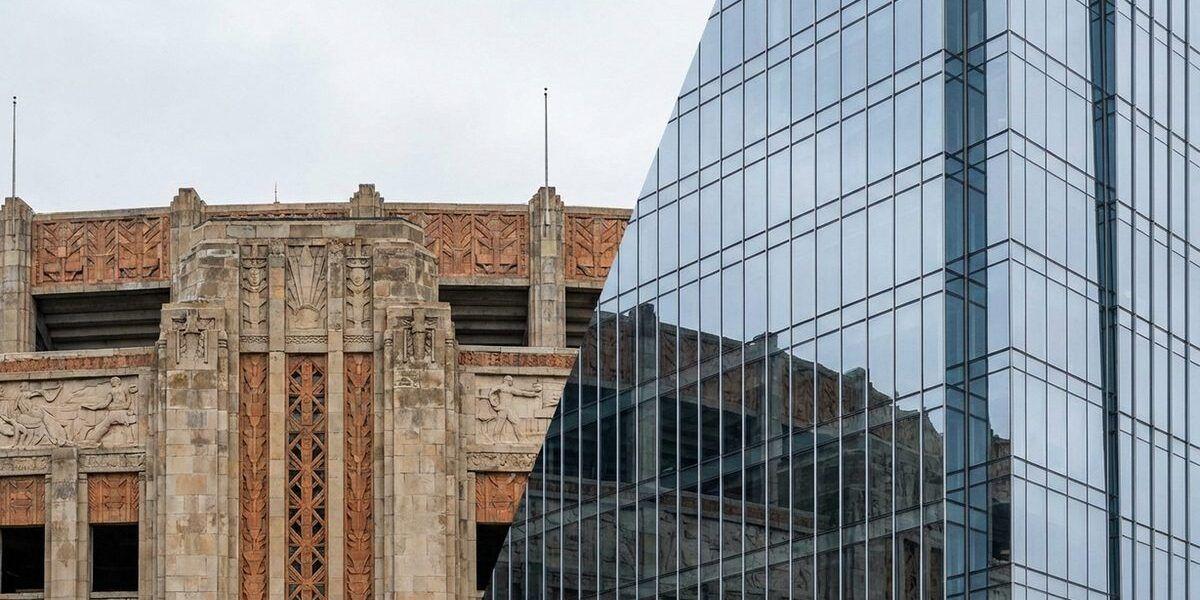
Stand on Avenell Road today and you will find luxury flats where once there stood a cathedral. The apartments are handsome enough, and the developers had the decency to preserve the Art Deco façade of the East Stand — a Grade II listed monument to a bygone age of football architecture. But flats are flats, and Highbury was something else entirely. Highbury was home.
Arsenal’s relationship with Highbury began in 1913, when the club — newly relocated from Plumstead in south-east London to the distinctly north London borough of Islington — moved into a ground that would define not just the club’s identity, but the very character of English football for nearly a century. The original ground was modest, as grounds were in those days, but ambition was never in short supply at Arsenal. Under the visionary chairmanship of Sir Henry Norris and later the revolutionary management of Herbert Chapman, Highbury was transformed from a functional football ground into something approaching a sporting palace.
The Art Deco Masterpiece
The East Stand, designed by Claude Waterlow Ferrier and William Binnie and completed in 1936, was unlike anything English football had seen. Art Deco in style, with its clean lines, geometric patterns, and that magnificent marble entrance hall, it was a statement of intent: Arsenal were not merely a football club, they were an institution. The marble halls became synonymous with the club itself — a byword for class, for tradition, for a certain way of doing things that set Arsenal apart from their peers.
The West Stand followed in 1932, designed by the same architectural firm, and together the two structures gave Highbury an elegance that was entirely at odds with the utilitarian brutalism of most English football grounds. While other clubs made do with corrugated iron and concrete, Arsenal sat in Art Deco splendour, watching football through the prism of sophistication. It was, some might argue, the beginning of the “boring, boring Arsenal” myth — the idea that the club was somehow too refined, too pleased with itself, too concerned with appearances. The charge was always unfair, but it stuck nonetheless.
The Clock End and the North Bank
If the East Stand was Highbury’s face, the Clock End and the North Bank were its heart. The Clock End, with its iconic timepiece mounted above the terrace, became one of the most recognisable images in English football. The clock itself was moved to the Emirates, of course, but it never quite looked right in its new surroundings — like a grandfather clock in a space station.
The North Bank was where the noise came from. This was Arsenal’s Kop, its Stretford End, its Holte End — the standing terrace where the most passionate supporters congregated and from which the songs and the fury emanated. When the North Bank was in full voice, Highbury became a cauldron. When the Taylor Report demanded all-seater stadia in the early 1990s, the conversion of the North Bank into a seated stand was felt as a genuine loss. Something vital was diminished, even if safety demanded the change.
The Golden Years at Highbury
The memories that Highbury holds are the memories of Arsenal’s greatest triumphs. Chapman’s revolutionary teams of the 1930s, who won five league titles in eight years. The post-war side of Tom Whittaker, with Joe Mercer and the Compton brothers. Bertie Mee’s Double-winners of 1971, with Charlie George’s iconic FA Cup final goal and the celebratory collapse on the Wembley turf. George Graham’s miserly defence of the late 1980s, with Adams, Bould, Dixon, and Winterburn forming a back four of such obduracy that opposing forwards reportedly developed anxiety disorders.
And then, of course, there was Wenger. Arsène Wenger’s Arsenal played the most beautiful football Highbury ever witnessed, and the old ground responded in kind. The pitch, always immaculate, became a canvas for Bergkamp’s artistry, Henry’s devastating runs, Pirès’s silken dribbles. Highbury in the early 2000s was football’s Sistine Chapel — a confined, intimate space in which genius was displayed at close quarters. As we detailed in our piece on the Invincibles’ unbeaten season, the 2003/04 campaign was Highbury’s last great hurrah as a competitive fortress.
Why Arsenal Had to Leave
The brutal arithmetic of modern football forced Arsenal’s hand. Highbury’s capacity, constrained by its location in a dense residential area, was limited to 38,419 following the conversion to an all-seater stadium. In a Premier League increasingly driven by matchday revenue, this was a crippling disadvantage. Manchester United’s Old Trafford held over 67,000. Even Newcastle’s St James’ Park dwarfed Highbury’s capacity.
Wenger’s teams were generating extraordinary demand for tickets, but the supply was hopelessly inadequate. Season ticket waiting lists stretched into decades. Revenue that should have been flowing into the transfer budget was being lost to the simple lack of seats. The mathematics were unarguable: if Arsenal wanted to compete with the financial might of clubs backed by oligarchs and oil states, they needed a bigger ground.
The decision to build a new stadium at Ashburton Grove, barely 500 yards from Highbury, was taken in the early 2000s. It was the right decision. It was also, for many supporters, a bereavement.
The Emirates: A New Home
The Emirates Stadium opened its doors in July 2006, and the numbers were immediately impressive. A capacity of 60,260. State-of-the-art facilities. Corporate hospitality that rivalled anything in European football. The naming rights deal with Emirates airline — worth a reported £100 million over fifteen years — was a necessary evil, the kind of commercial pragmatism that sticks in the throat but fills the coffers.
The stadium itself is a handsome structure, all sweeping curves and glass and steel. On a match day, with the sun catching the exterior and the crowds streaming down Holloway Road, it looks every inch the modern football cathedral. Inside, the bowl design ensures excellent sightlines from every seat, and when 60,000 voices combine, the atmosphere can be thunderous.
What Was Lost
But something was lost. It is easy to be sentimental about these things, and sentimentality is the enemy of progress. Yet even the most hard-headed pragmatist would concede that the Emirates has never quite replicated Highbury’s intimacy, its sense of enclosure, its feeling of proximity to the action. At Highbury, you could hear the players breathe. At the Emirates, you can see them from a comfortable distance, which is not quite the same thing.
The financial constraints imposed by the stadium move were profound. Arsenal spent nearly a decade paying off the construction costs, and during that period the transfer budget was severely restricted. While Chelsea and Manchester City spent hundreds of millions on players, Arsenal relied on youth development, shrewd scouting, and Wenger’s extraordinary ability to extract maximum value from limited resources. The trophy drought — eight years without silverware between 2005 and 2014 — was the price Arsenal paid for their new home.
What Was Gained
The Emirates gave Arsenal a financial foundation that will sustain the club for generations. The matchday revenue stream, the commercial opportunities, the sheer scale of the operation — these are the building blocks of long-term competitiveness. The lean years were an investment, and that investment is now beginning to pay dividends.
The stadium has also, gradually, developed its own character. The first years were sterile, the atmosphere thin and polite, the crowd uncertain of how to inhabit this vast new space. But time works its magic on all things, and the Emirates in full voice — a north London derby, a Champions League night, a late winner — can now generate an atmosphere that approaches, if not quite equals, the old ground’s intensity.
The Soul of a Stadium
The question of whether a stadium has a soul is, of course, absurd. Bricks and mortar and steel and concrete do not possess spiritual qualities. And yet every football supporter knows, instinctively and irrefutably, that some grounds feel different from others. Highbury felt different. It felt like Arsenal.
The Emirates is becoming Arsenal, slowly and surely. The memories are accumulating — Rosický’s chip against Spurs, Welbeck’s last-minute winner against Leicester, Özil’s pirouette and pass, Santi Cazorla’s impossible angles. Give it another fifty years and the Emirates will have its own mythology, its own ghosts, its own sacred corners. The clock is ticking, as it always does at Arsenal. Time, as ever, is on the side of those who wait.
But if you close your eyes and listen carefully on a quiet Islington evening, standing on what was once the North Bank terrace, you might just hear it: the roar of 38,000 voices, the thud of boot on ball, the echo of something that was lost but never quite forgotten. Highbury lives on, in memory and in marble, and in the hearts of everyone who was lucky enough to call it home.
The Matchday Experience: Then and Now
One of the most frequently discussed aspects of the transition from Highbury to the Emirates is the matchday experience — that intangible combination of ritual, atmosphere, and sensory input that transforms the act of watching football from passive entertainment into active participation. At Highbury, the matchday experience was shaped by constraint. The narrow streets around the ground — Avenell Road, Gillespie Road, Highbury Hill — funnelled supporters towards the turnstiles in a way that created a natural crescendo of anticipation. The pubs were packed by noon. The chip shops did brisk trade. The programme sellers stationed at every corner were as much a part of the landscape as the lamp posts.
Inside the ground, the intimacy was everything. The distance between the front row and the touchline was negligible. You could see the sweat on the players’ brows, hear the thud of contact in the tackle, smell the grass after the groundsman’s morning ministrations. When the crowd rose as one — for a goal, for a near-miss, for a particularly crunching challenge — the sensation was not merely auditory but physical. Highbury vibrated.
The Emirates offers a different kind of experience, neither better nor worse but fundamentally different in character. The approach to the ground is wider, more spacious, designed for the efficient movement of 60,000 people rather than the organic chaos of 38,000. The concourses are broad and well-appointed, with food and drink options that would have seemed fantastical to the Highbury generation. The seats are comfortable, the sightlines excellent, the facilities modern and clean. It is, by every objective measure, a superior football-watching environment.
And yet something is missing. The compression of Highbury — the sense that the crowd was pressing in on the pitch, that the supporters were participants rather than spectators — has never been replicated at the Emirates. The bowl design, for all its architectural merit, disperses sound in a way that the enclosed, rectangular Highbury never did. A shout that would have echoed around the old ground for seconds dissipates into the open air at the Emirates in a fraction of the time. The result is an atmosphere that can be magnificent on its best nights — the north London derbies, the Champions League evenings — but that defaults to a polite hum on ordinary Saturday afternoons.
The Apartments: Highbury Square
The redevelopment of the Highbury site into luxury apartments — marketed as “Highbury Square” — was, in commercial terms, a masterstroke. The apartments, built within the shell of the old ground and incorporating the preserved Art Deco facades, sold at premium prices and generated significant revenue that helped offset the cost of the Emirates construction. The central garden, laid out on the old pitch, maintains the proportions of the original playing surface, and the listed East Stand facade looks out over it with the same imperious dignity it always possessed.
For supporters, the experience of visiting Highbury Square is a strange one. The architecture is familiar — the curved staircases, the marble entrance, the geometric window frames — but the context is utterly transformed. Where once there were turnstiles and programme sellers and the low hum of pre-match anticipation, there are now doorbells and bicycle racks and the particular silence of expensive north London real estate. It is Highbury and it is not Highbury. The bones remain; the soul has migrated half a mile up the road.
This is not a complaint. Buildings serve their purpose and then they serve another, and the preservation of Highbury’s facades was a more sensitive outcome than the total demolition that many feared. The club’s history is not contained in bricks and mortar — it lives in the memories of supporters, in the record books, in the photographs and match programmes and songs that pass from one generation to the next. Highbury was a football ground. It is now a residential development. Arsenal endure, as they always have, regardless of their address.